---
title: "GHG Protocol Corporate Standard and Scope 3 Guidance"
url: "https://help.carbonsig.app/en/article/ghg-protocol-corporate-standard-and-scope-3-guidance"
language: "en"
last_updated: "2025-05-29T18:53:40.476Z"
---
# GHG Protocol Corporate Standard and Scope 3 Guidance
The GHG Protocol Corporate Standard and Scope 3 Guidance together provide a comprehensive framework for organizations to measure and manage their greenhouse gas emissions across their entire value chain.
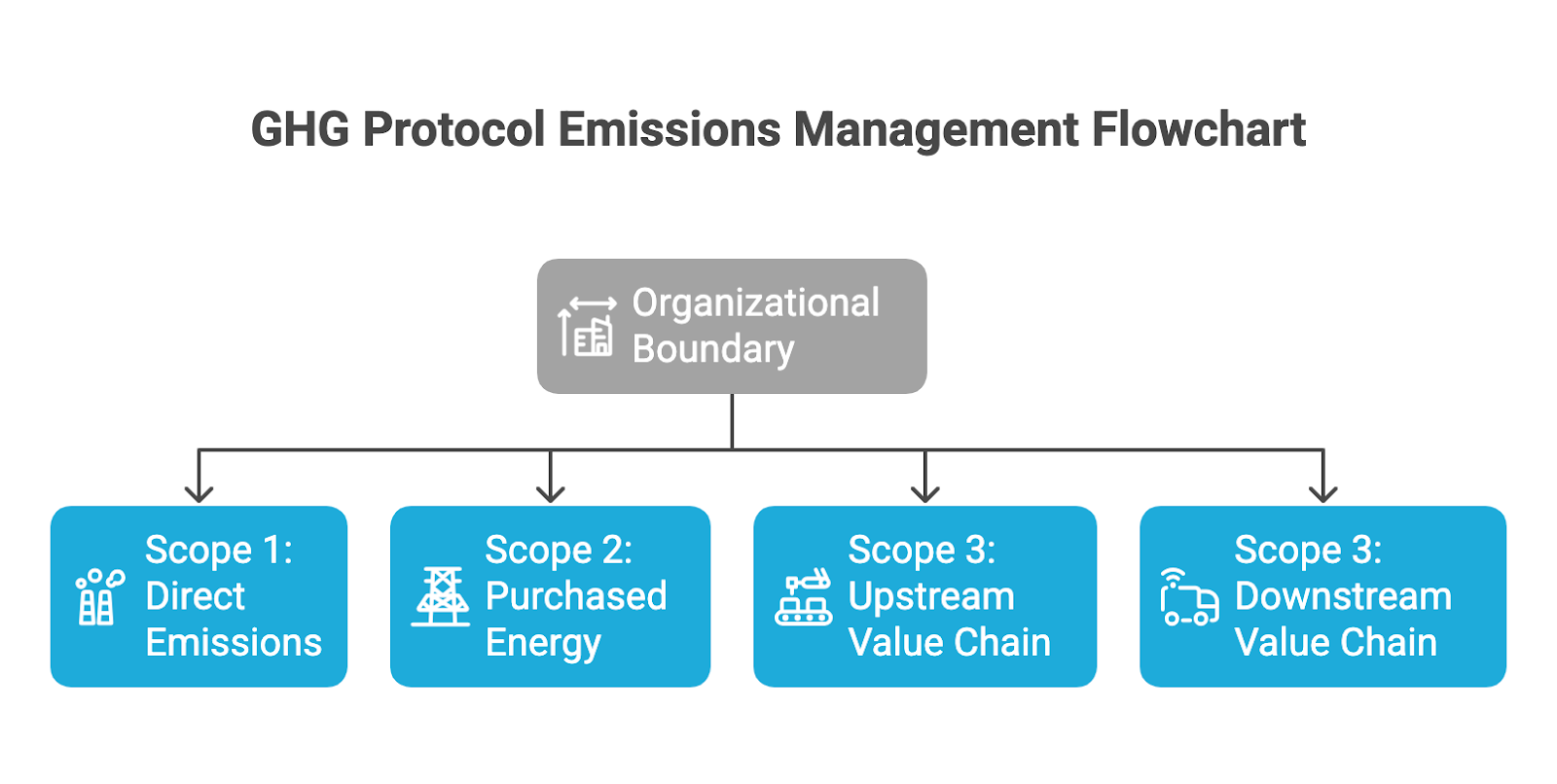Organizational BoundaryScope 1Direct EmissionsScope 2Purchased EnergyScope 3UpstreamScope 3DownstreamValue Chain
## **Corporate Standard Overview**
The GHG Protocol Corporate Standard provides requirements and guidance for companies preparing a corporate-level GHG emissions inventory. It covers accounting and reporting principles, setting organizational boundaries, and establishing operational boundaries.
### **Key Principles**

- **Relevance:** Ensure the inventory appropriately reflects emissions and serves decision-making needs
- **Completeness:** Account for and report all GHG emission sources and activities within chosen boundaries
- **Consistency:** Use consistent methodologies to allow meaningful comparisons over time
- **Transparency:** Address all relevant issues factually and coherently
- **Accuracy:** Ensure calculations are systematically neither over nor under actual emissions
### **Organizational Boundaries**
Companies must choose an approach for consolidating GHG emissions:
- **Equity Share:** Account for GHG emissions based on share of equity in operations
- **Financial Control:** Account for GHG emissions from operations over which the company has financial control
- **Operational Control:** Account for GHG emissions from operations over which the company has operational control

**Example: Organizational Boundary Setting**
A company owns:
- Manufacturing facility (100% ownership)
- Joint venture facility (40% ownership)
- Leased warehouse (operational control)
Under different approaches:
- Equity Share: 100% of facility 1 emissions + 40% of facility 2 emissions
- Operational Control: 100% of facility 1 and warehouse emissions
## **Scope 3 Guidance**
The Scope 3 Standard provides requirements and guidance for accounting and reporting value chain emissions. It complements and builds upon the Corporate Standard.
### **Scope 3 Categories**
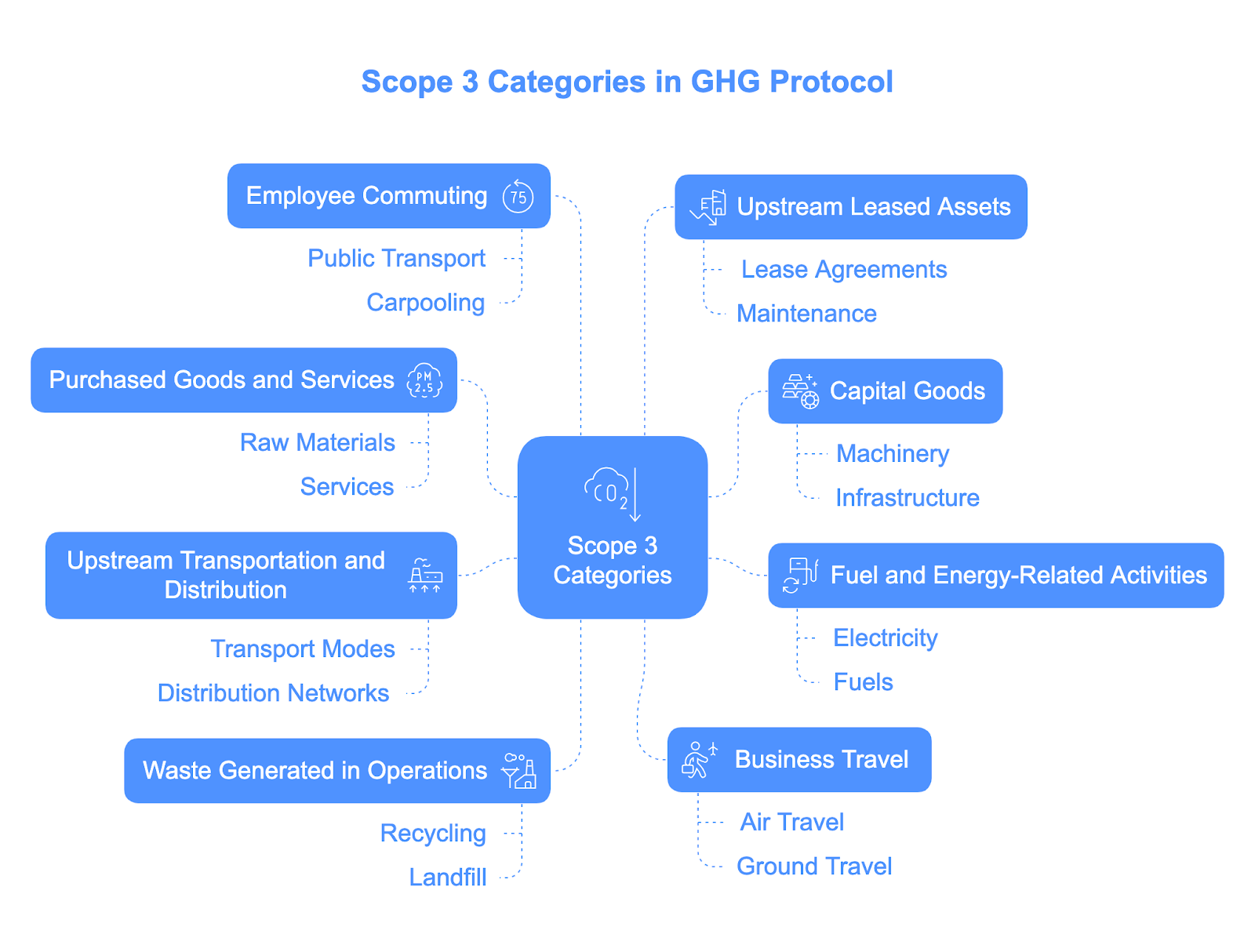
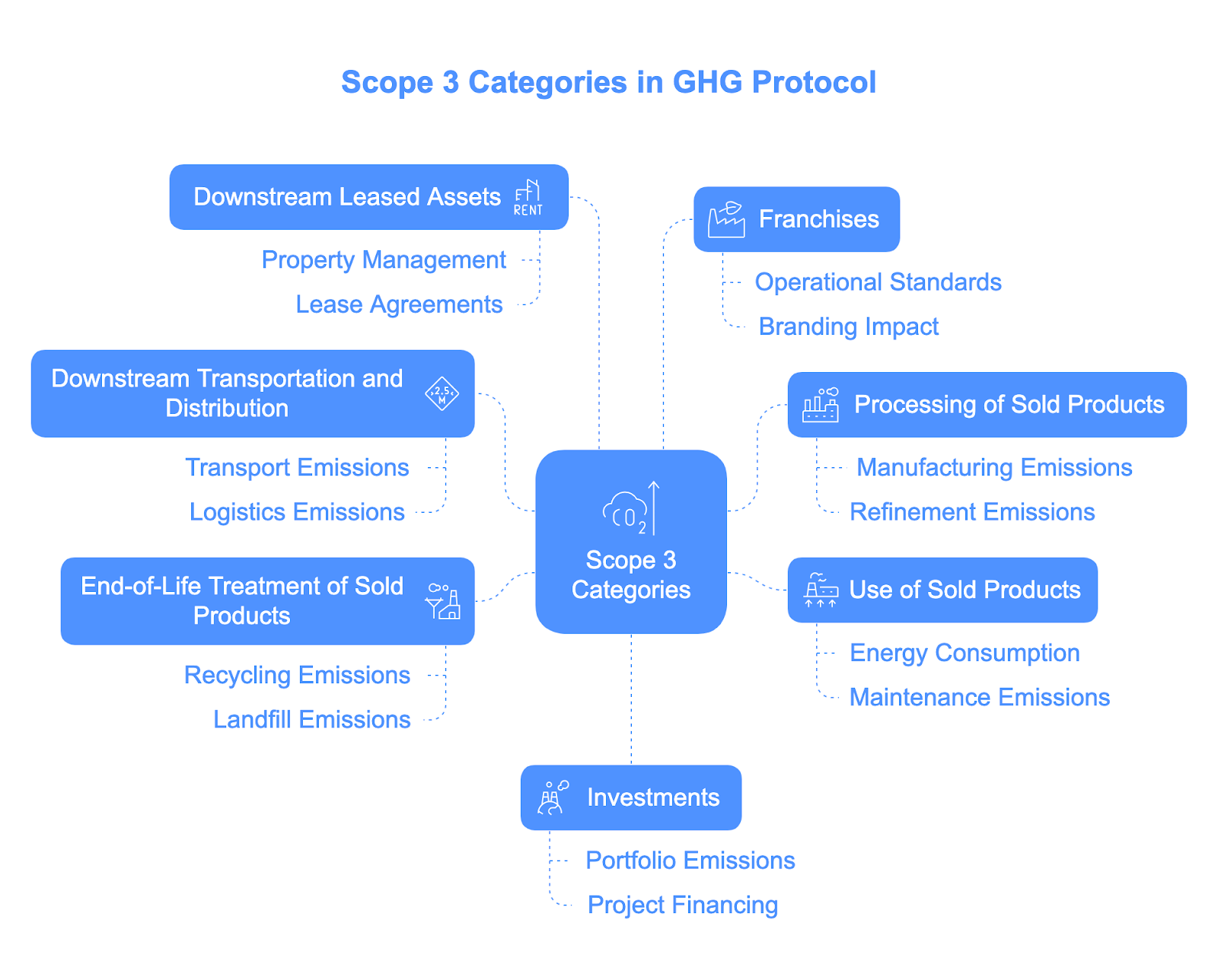
| **Upstream Categories** | **Downstream Categories** |
| --- | --- |
| 1. Purchased goods and services
2. Capital goods
3. Fuel and energy-related activities
4. Upstream transportation and distribution
5. Waste generated in operations
6. Business travel
7. Employee commuting
8. Upstream leased assets | 1. Downstream transportation and distribution
2. Processing of sold products
3. Use of sold products
4. End-of-life treatment of sold products
5. Downstream leased assets
6. Franchises
7. Investments |
### **Upstream**
### **Calculation Requirements**
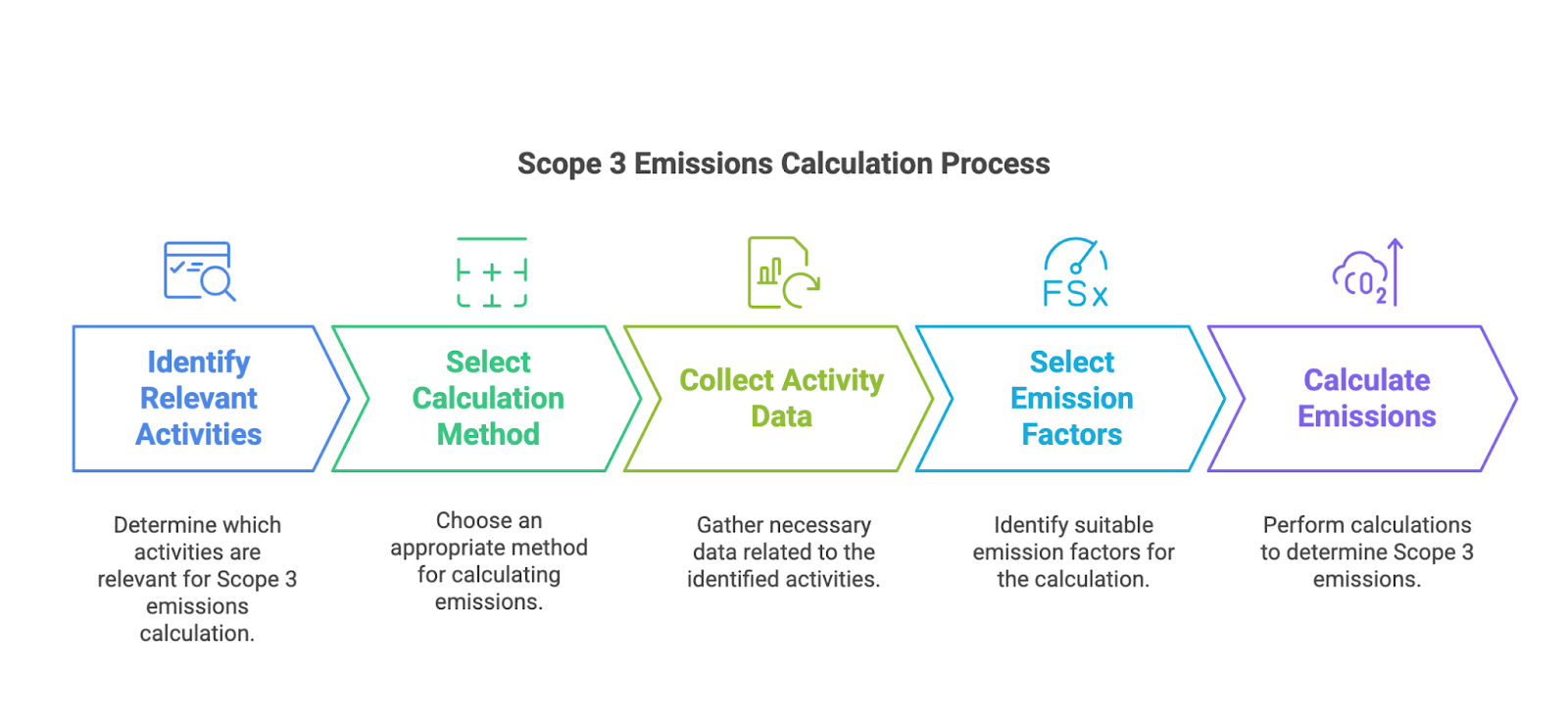
For each Scope 3 category:
- Identify relevant activities
- Select calculation method:
- Supplier-specific method
- Average-data method
- Spend-based method
- Hybrid method
- Collect activity data
- Select emission factors
- Calculate emissions
**Example: Calculating Category 1 Emissions**
For purchased goods using spend-based method:
- Annual spend on steel: $1,000,000
- Emission factor: 3 kg CO₂e/$
- Calculation: $1,000,000 × 3 kg CO₂e/$ = 3,000,000 kg CO₂e
## **Implementation Guidance**
### **Setting Boundaries**
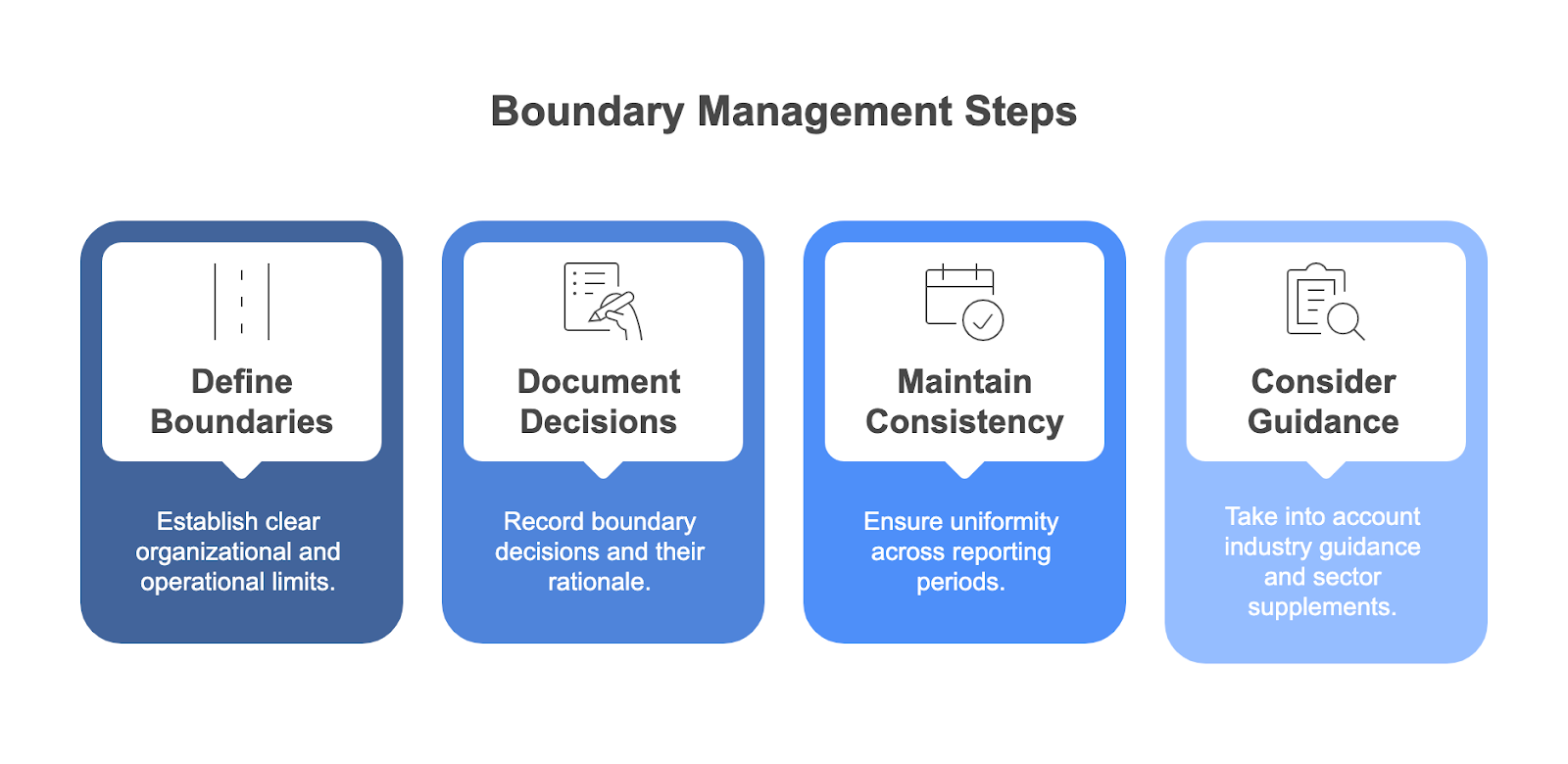
- Define clear organizational and operational boundaries
- Document boundary decisions and rationale
- Maintain consistency across reporting periods
- Consider industry guidance and sector supplements
### **Data Collection and Quality**
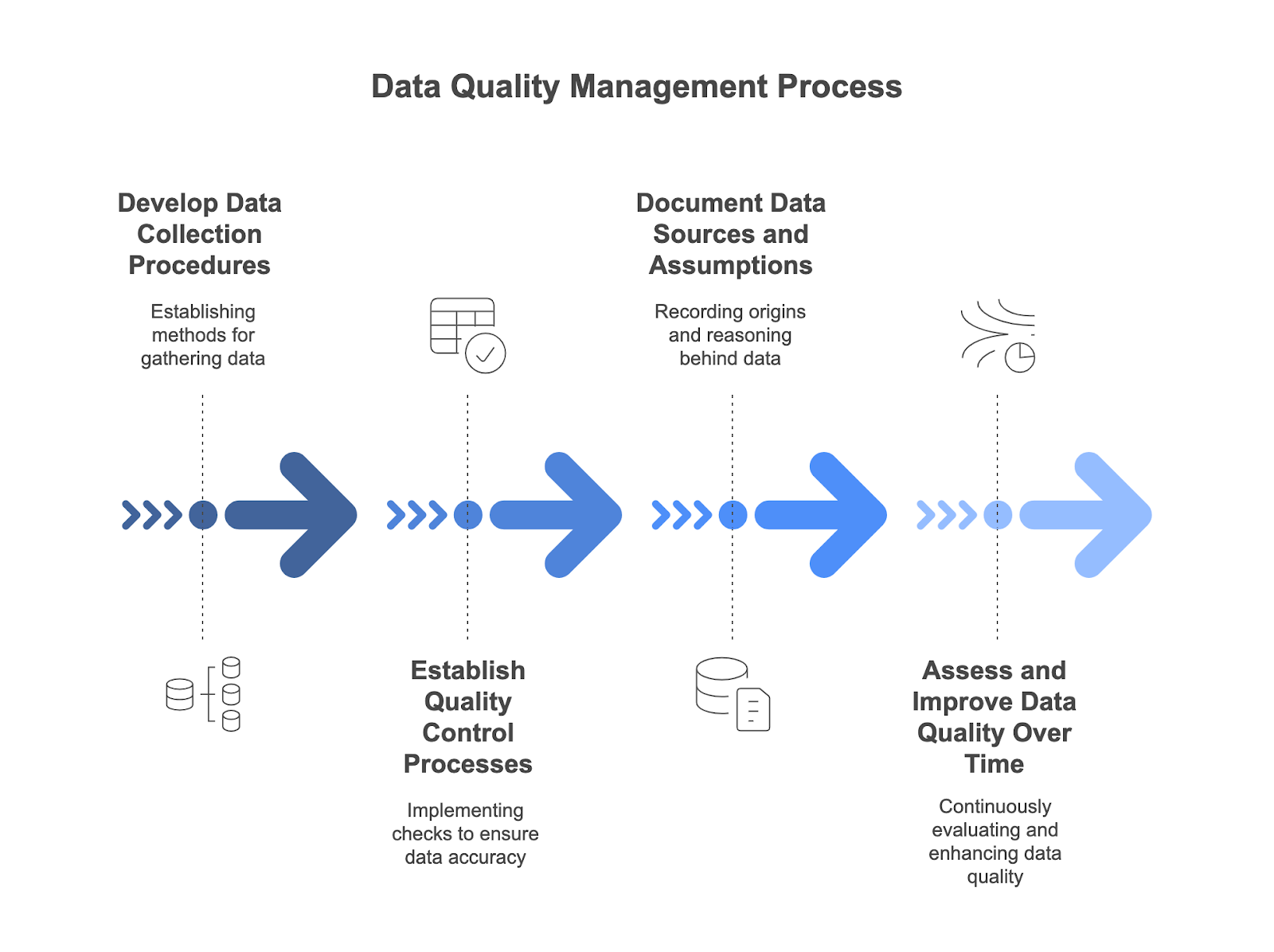
- Develop data collection procedures
- Establish quality control processes
- Document data sources and assumptions
- Assess and improve data quality over time
### **Reporting Requirements**
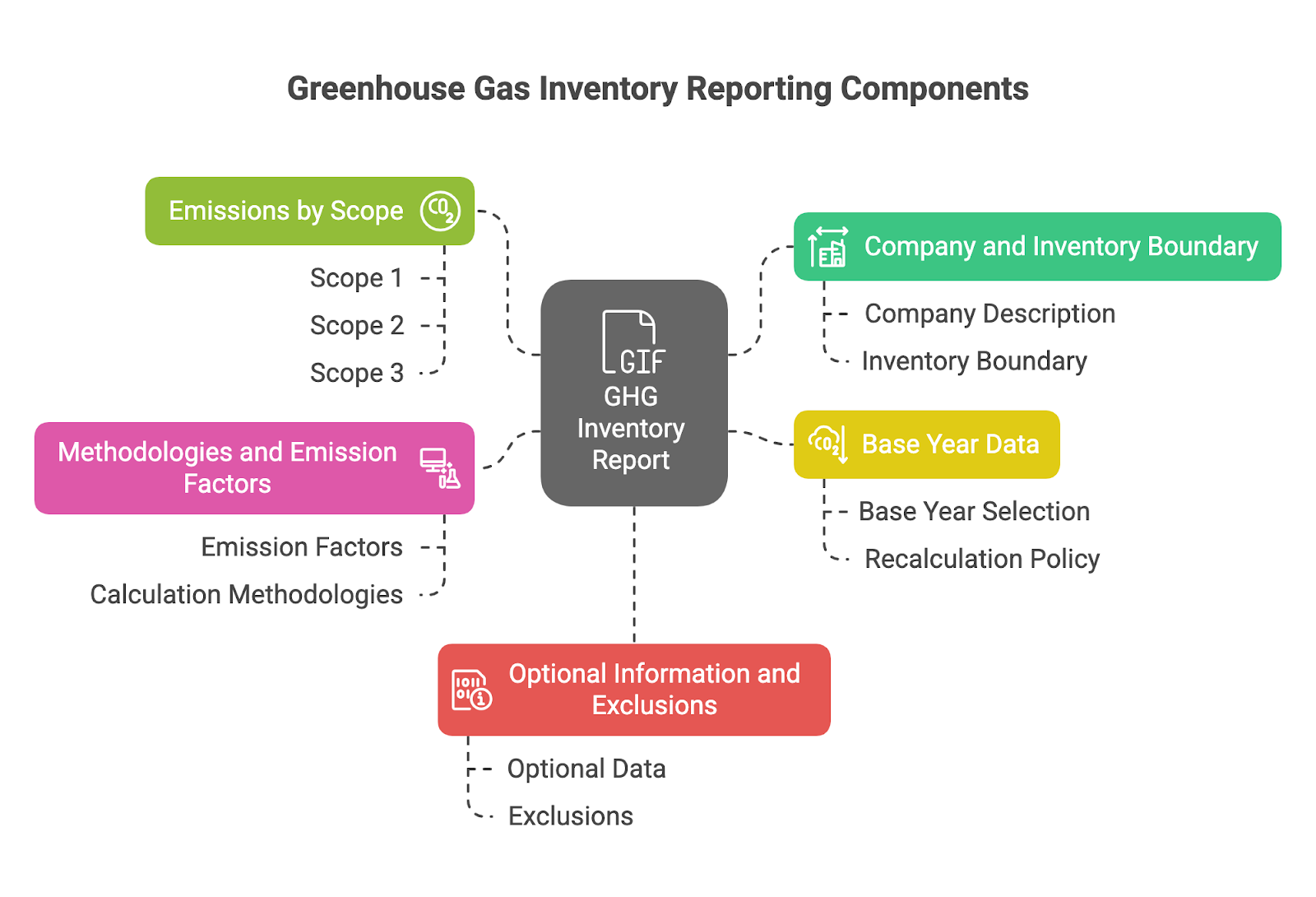Required information includes:
- Description of the company and inventory boundary
- Information on emissions by scope
- Base year emissions data and recalculation policy
- Description of methodologies and emission factors
- Information on optional information and exclusions
**Best Practices:**
**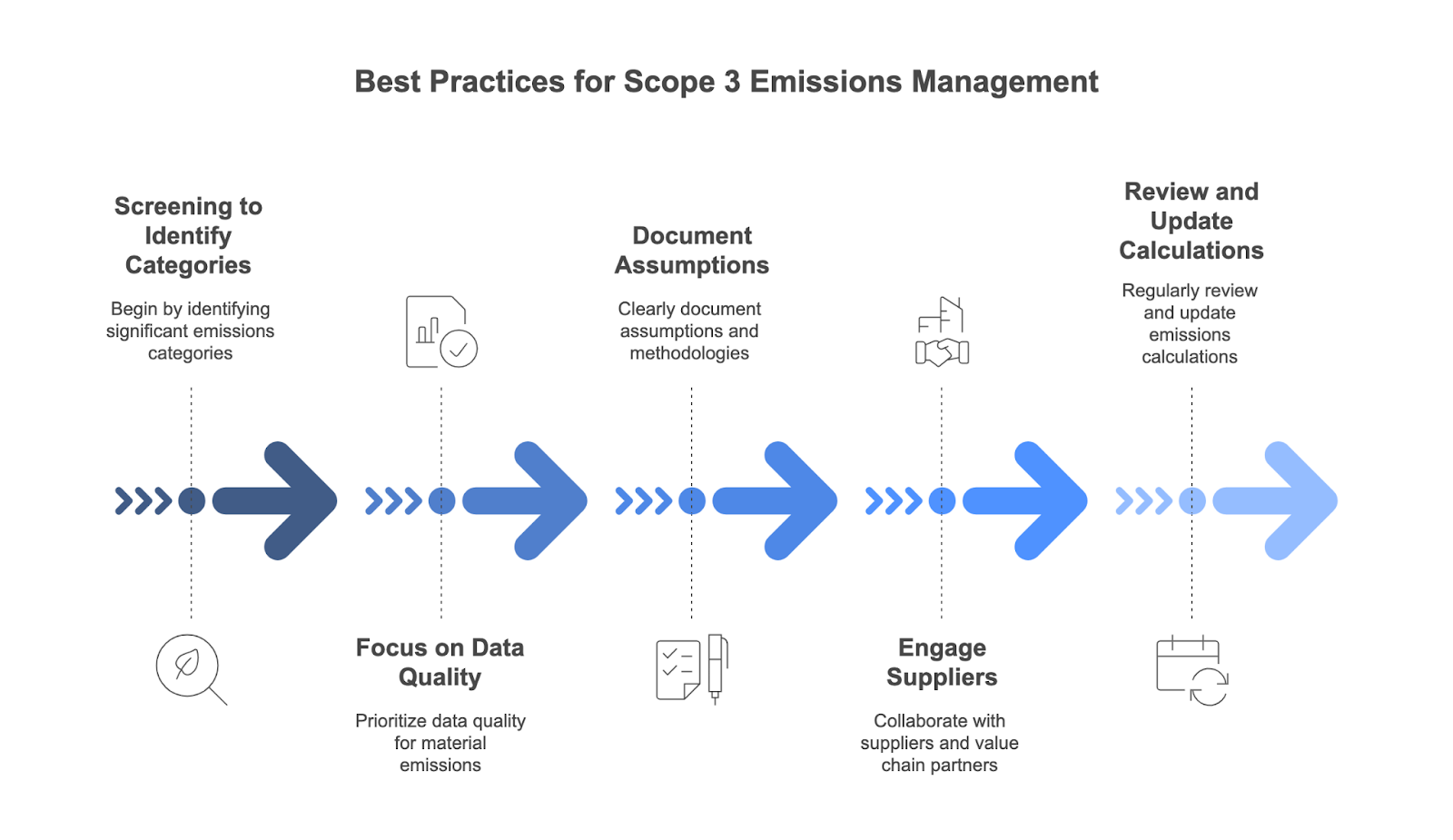**
- Start with screening to identify significant categories
- Focus on data quality for material emissions sources
- Document assumptions and methodologies clearly
- Engage suppliers and value chain partners
- Review and update calculations regularly